
How AI Is Making Dental 3D Printing Easier Than Ever
Dental 3D printing is transforming the way dental practices approach restorations, appliances, and in-office production. From crowns and bridges to surgical guides, splints, and dentures, digital dentistry is creating new opportunities to streamline workflows and bring more production in-house.
But while the benefits are exciting, getting started can feel overwhelming. Dental professionals must navigate scanning, design software, print preparation, material selection, printing, washing, and post-curing—all while ensuring that finished products meet the requirements of their intended applications.
That’s where artificial intelligence (AI) and modern dental software come in.
AI-powered design and print-preparation tools are helping automate repetitive tasks, simplify technical decisions, and make digital workflows more accessible. Combined with intuitive printers, application-specific resins, and dedicated post-processing equipment, these technologies are helping dental professionals spend less time navigating software and more time focusing on patient care.
Here’s how AI is changing dental 3D printing—and the software and equipment helping make it happen.
AI Is Simplifying Dental 3D Print Preparation
One of the biggest challenges in dental 3D printing happens before the printer even starts.
A digital dental design must be prepared for the specific printer, material, and application. This often involves determining the correct orientation, generating support structures, arranging objects on the build platform, and selecting appropriate printing parameters.
For beginners, these steps can involve a steep learning curve. Incorrect orientation or insufficient support structures may contribute to failed prints, wasted resin, and additional production time.
AI-assisted slicing software is helping simplify this process by automating some of the decisions that previously required more manual input.
Ackuretta ALPHA AI
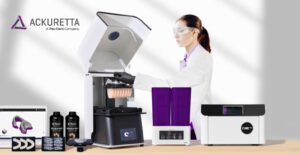
ALPHA AI is Ackuretta’s dental 3D printing slicing software, designed to help users prepare dental applications for printing.
Its standard software includes tools for importing STL files, orienting applications, generating supports, nesting objects, and slicing files into printable jobs. The ALPHA AI Premium module adds AI-assisted orientation and support generation to help users prepare applications with fewer manual steps.
Depending on the supported application, users can import a completed digital design, select the appropriate printer and resin, and use automated tools to prepare it for production.
Supported applications include crowns and bridges, splints, surgical guides, and selected denture and model workflows.
These capabilities can be particularly helpful for practices that don’t have a dedicated dental CAD designer or technician on staff.
Instead of learning every technical detail of print preparation from scratch, team members can use software-assisted tools to establish a more streamlined process while retaining the ability to review and adjust the result.
Learn more about Ackuretta and its digital dentistry solutions.
AI-Powered Dental Production Platforms Are Connecting the Workflow
AI isn’t only changing how individual files are prepared. It’s also helping connect the people and processes involved in dental production.
For practices and laboratories producing restorations in-house, managing case information, digital designs, production steps, and communication between team members can become increasingly complex.
RodinWorks
RodinWorks is Pac-Dent’s AI-powered dental production platform, designed to support clinics and laboratories working within the Rodin ecosystem.
The platform brings AI-assisted design, production review, and output into a shared workspace, helping connect digital design and production activities.
This type of connected environment can be especially useful when clinicians, designers, and production teams collaborate on cases. Rather than relying entirely on disconnected tools and separate handoffs, a shared platform can help teams coordinate their work and review production information in one place.
For practices expanding their in-office capabilities, software that connects design and production can help make digital dentistry easier to manage as case volume grows.
AI-assisted design and production tools are not a replacement for clinical expertise. Dental professionals must still review designs, confirm the intended application, and follow the relevant material and manufacturing requirements.
However, by reducing workflow friction and connecting important production steps, platforms like RodinWorks demonstrate how software can help make dental 3D printing more manageable.
Dental CAD Software Is Making Digital Design More Accessible
AI-assisted print preparation is only one part of the process. Before a dental application can be prepared for printing, the digital design must first be created.
This is where computer-aided design (CAD) software comes in.
CAD tools allow dental professionals and laboratory technicians to develop digital models of restorations and appliances based on scans, patient anatomy, and the requirements of the case.
Several software platforms support different areas of digital dentistry.
exocad
exocad provides dental CAD software used to design restorations and other dental applications. Depending on the software module and workflow, users can design crowns, bridges, dentures, and other prosthetic applications.
Its role in the workflow is to help create the digital geometry of the intended dental product. That design can then be exported in a compatible format, such as STL, for print preparation.
3Shape
3Shape offers digital dentistry software and scanning solutions used in restorative, prosthetic, and laboratory workflows. Its software ecosystem supports the creation of digital dental designs that can be passed into compatible manufacturing workflows.
Medit
Medit provides intraoral scanning systems and digital dentistry software that help capture and work with digital dental information. Depending on the application and software, these tools can form part of the process of moving from a patient’s scan to a digital design.
These platforms serve different purposes, and their capabilities vary by product, module, and application. The important distinction is that CAD software creates the digital design, while slicing software prepares that design for the 3D printer.
When the software tools work together, dental professionals can move more efficiently from digital scans to printable files without treating every stage as a separate process.
A More Guided Workflow Can Make 3D Printing Easier to Adopt
Software is only one part of successful digital dentistry. Practices also need equipment that fits their workflow, materials appropriate for their intended applications, and support when questions arise.
For practices new to in-office production, a guided setup can make a meaningful difference.

Ackuretta SOL SE Printer with Concierge Service
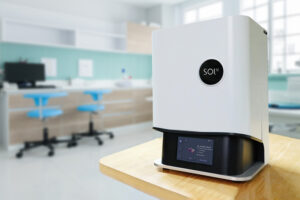
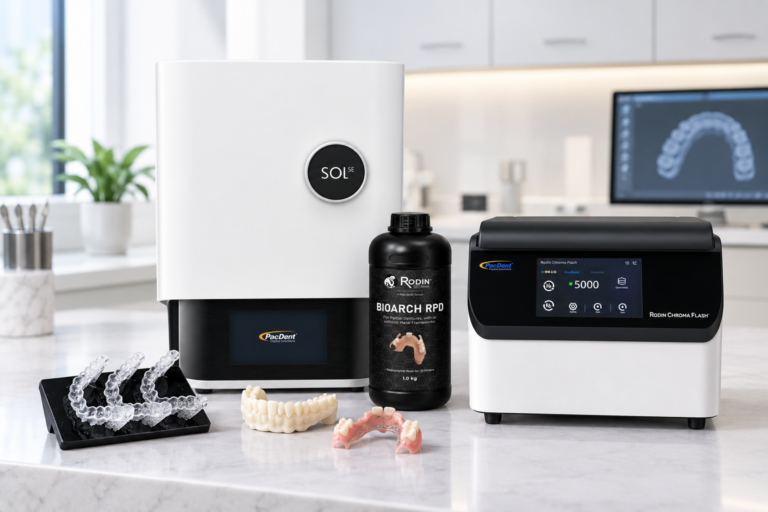
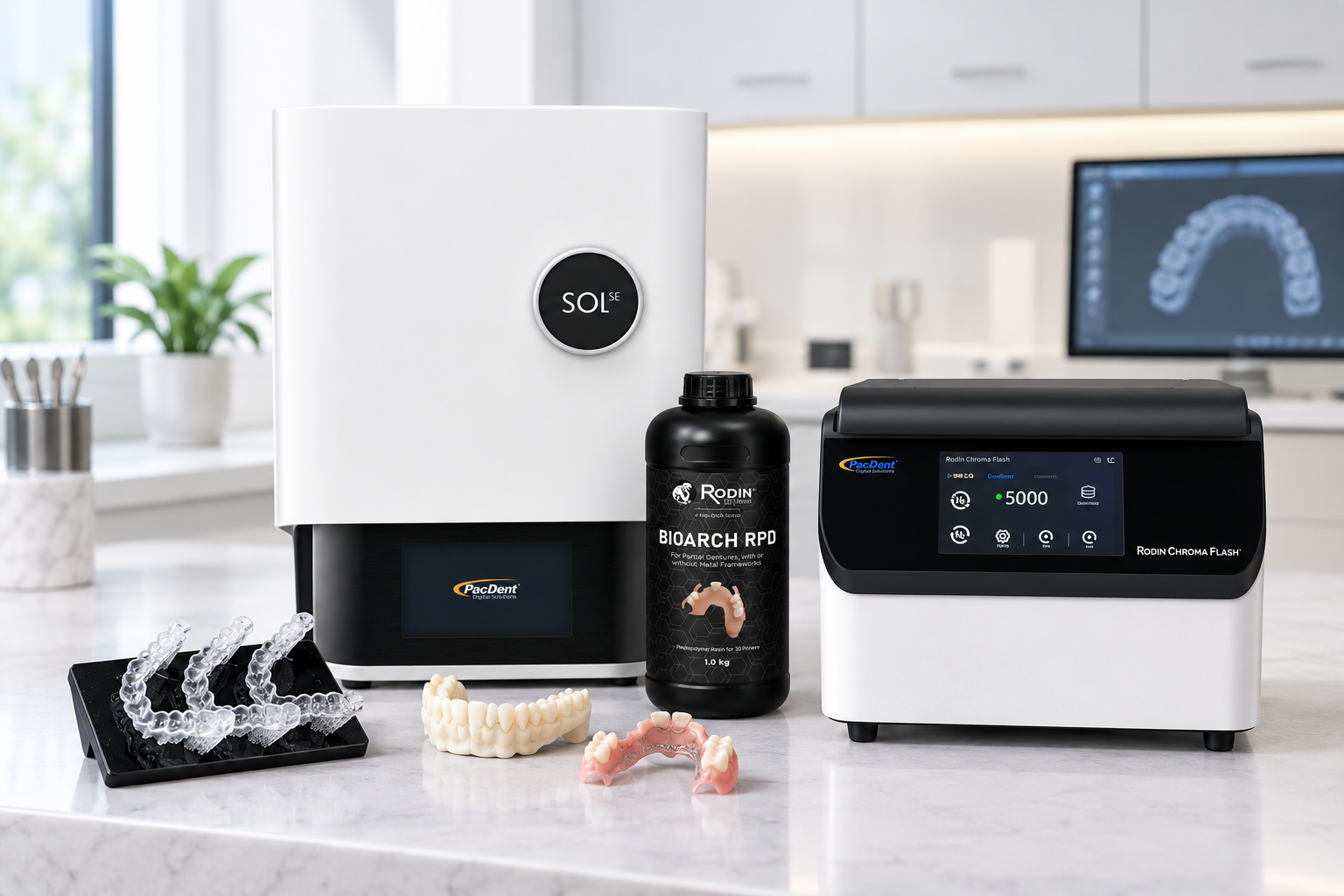
The Ackuretta SOL SE Printer with Concierge Service combines a dental 3D printing system with onboarding and technical support to help practices get started.
The SOL SE features 49-micron XY resolution and layer thicknesses as fine as 30 microns. It supports a broad range of validated resins, giving practices flexibility when selecting materials for their digital workflows.
When paired with compatible software such as ALPHA AI, the printer becomes part of a more coordinated process that connects digital design, print preparation, and production.
Concierge Service can also help practices navigate setup and workflow questions, making the transition to in-office 3D printing more approachable.
For dental teams evaluating their first printer, the combination of equipment, software, and support may be just as important as the printer’s technical specifications.
Validated Resins Help Connect Digital Designs to Clinical Applications
Even with advanced software, the material used for a printed dental application remains critical.
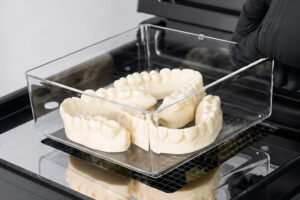
Different applications require different material properties. A study model, surgical guide, splint, denture, temporary restoration, or permanent restoration may each require a specific resin and processing protocol.
The material must be appropriate for the intended use, compatible with the printer, and processed according to the manufacturer’s instructions.
Rodin 3D Resins
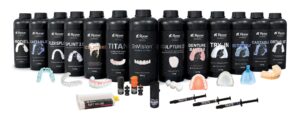
Rodin 3D resins from Medidenta includes application-specific materials for a variety of digital dental workflows.
Examples include:
- Rodin Sculpture 2.0: A zirconia-infused, ceramic-filled resin intended for indicated restorative applications, including permanent crowns.
- Rodin Titan: A resin designed for full-arch restorations and provisional hybrid denture applications.
- Rodin RapidCeram: A material developed for high-speed production of indicated restorations.
- Rodin TruModel: A resin for dental models.
- Rodin Flexisplint: A material for indicated flexible splint applications.
The benefit of combining digital design software with application-specific materials is a more clearly defined path from the original scan to the finished product.
However, software compatibility alone does not establish clinical suitability. Dental professionals should confirm that the specific printer, resin, design, and post-processing workflow are validated for the intended application.
Automated Post-Processing Helps Complete the Workflow
Printing the part is only one stage of dental 3D printing. Washing, finishing, and post-curing are also important, and the appropriate procedures depend on the material and application.
Post-curing, in particular, must follow the resin manufacturer’s instructions. A printed part that looks finished may still require a specific curing process to achieve its intended material properties.
Dedicated post-processing equipment helps make these steps more structured and repeatable.

Rodin Chroma Flash Light Cure Box
The Rodin Chroma Flash Light Cure Box is a flash post-curing system designed to deliver controlled, consistent curing for a range of dental 3D printing applications, including ceramic-filled and standard dental resins.
Its xenon flash curing technology is designed to support consistent polymerization across compatible materials.
The Chroma Flash workflow also includes an intelligent tack-curing cycle and an open, material-first approach, helping integrate post-curing into a more coordinated production process.
When paired with appropriate Rodin materials and their prescribed processing instructions, a dedicated curing system helps dental teams establish a defined workflow from printing through final processing.
The goal is not simply to print faster. It’s to make the entire production process easier to understand, follow, and repeat.
AI Can Help Practices Reduce Workflow Friction and Explore New Applications
The combination of AI-assisted software, digital design tools, and in-office printing equipment can create opportunities for dental practices to rethink how they produce selected items.
Depending on the practice’s needs and the applications involved, in-office 3D printing may support the production of:
- Dental models and diagnostic aids
- Surgical guides
- Splints and guards
- Dentures and related prosthetic components
- Selected temporary and permanent restorations
AI-assisted design and print preparation can help reduce repetitive manual tasks, while connected production platforms can make it easier for teams to coordinate work.
These advantages may contribute to more efficient turnaround, greater control over production scheduling, and potential cost savings for suitable applications.
Actual results depend on case volume, software and equipment costs, staffing, material consumption, maintenance, and the amount of training required. Practices should evaluate these factors before deciding which applications to bring in-house.
A practical approach is to begin with one or two appropriate applications, establish a validated workflow, and expand as the team gains experience.
The Future of Dental 3D Printing Is About Connecting the Entire Workflow
The biggest opportunity in digital dentistry isn’t any single AI feature or piece of equipment. It’s the ability to connect the steps involved in producing a dental application.
Consider the typical workflow:
- Scan: Capture the patient’s dentition using an appropriate digital scanning method.
- Design: Use dental CAD software to create the required restoration, appliance, or model.
- Prepare: Use slicing software such as ALPHA AI to orient the design, generate supports, arrange objects, and prepare the print job.
- Print: Produce the application using a compatible printer and validated resin.
- Wash and finish: Follow the material-specific cleaning and finishing instructions.
- Post-cure: Use the prescribed curing equipment and parameters.
- Review: Verify that the finished product meets the requirements of its intended application before clinical use.
AI can help simplify selected steps, but the complete workflow still depends on the appropriate combination of software, materials, equipment, training, and professional oversight.
Bringing AI and Dental 3D Printing Into Your Practice
AI is helping make dental 3D printing more approachable by simplifying print preparation, assisting with digital design, and connecting production workflows.
From AI-assisted orientation and support generation in Ackuretta ALPHA AI to the connected production capabilities of RodinWorks, modern dental software is helping reduce some of the technical barriers associated with in-office manufacturing.
When combined with the Ackuretta SOL SE Printer, application-specific Rodin resins, and the Rodin Chroma Flash curing system, these tools can help practices establish a more coordinated digital dentistry workflow.
You don’t have to adopt every new technology at once. Start by identifying an application that makes sense for your practice, choosing software and equipment suited to that workflow, and establishing the training and processing procedures needed to produce consistent results.
As AI-assisted tools continue to evolve, dental professionals will have more opportunities to simplify digital workflows and explore the possibilities of in-office production.
Ready to explore dental 3D printing? Visit Medidenta’s 3D printing solutions to discover equipment, materials, and resources to help bring digital dentistry into your practice.