
“Is Bone Grafting Still Necessary for Dental Implants?”
Presented by Dr. Rick Ferguson
Bone grafting has become one of the more debated topics in modern implant dentistry. As techniques such as tilted implants, short and narrow implants, zygomatic implants, and immediate full-arch treatment continue to gain popularity, patients are increasingly being presented with treatment options that promise fewer procedures and faster results.
But does that mean bone grafting is becoming obsolete?
According to Dr. Rick Ferguson, the answer is no.
In a recent dental implant webinar, Dr. Ferguson explained that while graftless implant treatment can be appropriate in selected cases, bone grafting remains an important part of the implant dentist’s clinical toolbox. The key is not whether bone grafting should always be performed, but when it makes a case more predictable.
Why Does Bone Matter for Dental Implants?
For an implant to remain stable and support a successful long-term restoration, there needs to be sufficient bone surrounding it.
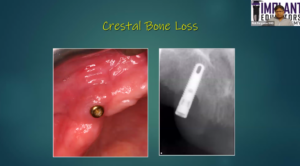
Dr. Ferguson emphasized planning for approximately 2 mm of bone thickness around an implant, particularly at the crestal area. While certain situations may tolerate less bone, he recommends striving for approximately 2 mm when planning for long-term stability.
The crestal area is especially important because the forces placed on an implant are concentrated near the crest. Unlike a natural tooth, an implant does not have a periodontal ligament to distribute occlusal forces along the root.
This is one reason simply finding enough bone to place an implant is not necessarily the same as creating an ideal implant site.
The goal should be to create an environment where the implant can be positioned properly and supported by healthy, stable hard and soft tissue.
“One Miracle at a Time”
One of the concepts Dr. Ferguson emphasized throughout the presentation was the idea of “one miracle at a time.”
When a case presents with significant bone deficiency, trying to accomplish everything simultaneously may not always be the most predictable approach. In many situations, it can be better to first rebuild the deficient bone and then return later to place the implant in the ideal position.
This staged approach can give clinicians greater control over the final result.
Rather than asking, “Can I get an implant in here?” the better question may be:
“What do I need to do to create the best possible implant site?”
That distinction can have a significant impact on treatment planning.
When Graftless Implant Treatment Makes Sense
There is a growing demand for graftless implant treatment, particularly in full-arch dentistry. Patients understandably prefer fewer surgeries, shorter treatment timelines, and the possibility of leaving the dental office with functioning teeth the same day.
Modern technology has made these approaches increasingly feasible.
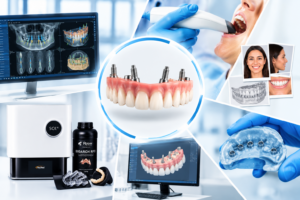
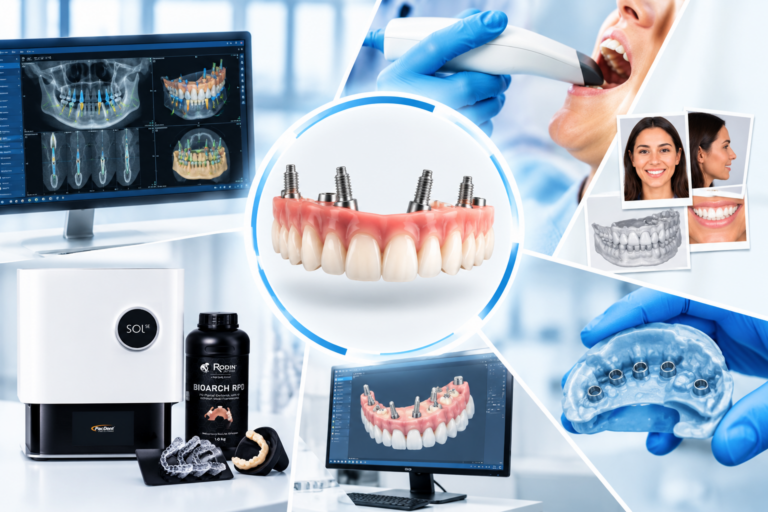
Dr. Ferguson described full-arch workflows that combine implants with photogrammetry, digital scanning, 3D printing, and digitally designed provisional prostheses. These technologies can allow clinicians to efficiently provide an immediate provisional restoration in appropriately selected cases.
However, graftless does not automatically mean better.
Dr. Ferguson noted that some graftless approaches can introduce their own complications, and techniques may evolve as clinicians gain more experience with their long-term outcomes. In some situations, even a graftless approach can benefit from additional grafting to improve the biological environment around implants.
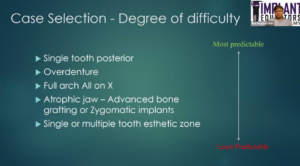
The takeaway is not that graftless treatment should be avoided. Rather, case selection and predictability should drive the treatment plan—not the desire to eliminate a procedure at all costs.
A Case for Staging Treatment
One of the most compelling examples from the webinar involved a patient with severe bone loss who was considering an aggressive full-arch treatment.
Rather than attempting to place implants immediately into severely deficient anatomy, Dr. Ferguson described a staged approach that included bone grafting and bilateral sinus lifts. The patient wore a denture during the healing period before returning for implant placement.
Once the grafted areas had healed, the team was able to place six implants with good distribution and then provide an immediate printed prosthesis following implant placement.
The result was a predictable full-arch restoration supported by adequate bone.
The case illustrates an important principle: sometimes slowing down the first phase of treatment can make the overall treatment more predictable.
Bone Grafting Can Turn a Difficult Case Into a Predictable One
Another case presented during the webinar involved a patient with a very narrow ridge.
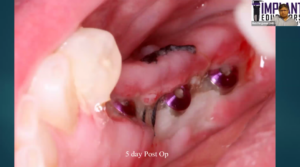
The site had only approximately 3 mm of bone width, making conventional implant placement inappropriate. A ridge split would also have presented significant fracture risk because of the thin anatomy.
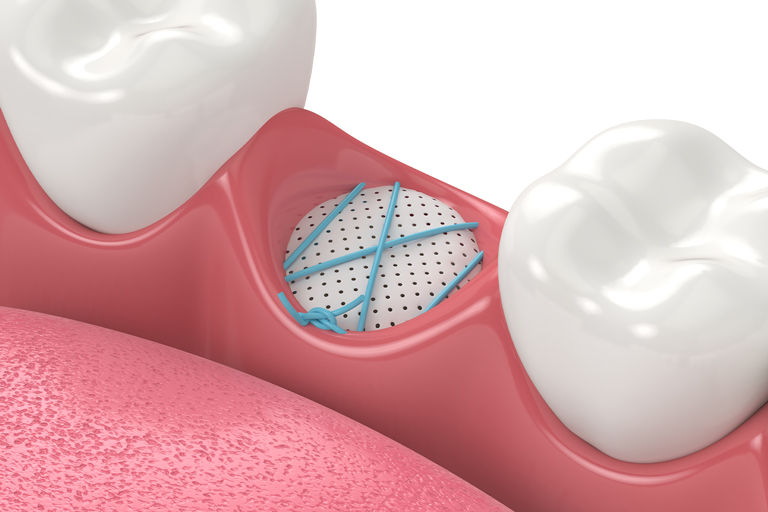
Instead, Dr. Ferguson used guided bone regeneration (GBR) to increase the available bone. After allowing the site to heal, the area was re-entered and demonstrated substantial new bone formation and increased ridge thickness.
The implant could then be placed in a much more favorable position.
This is where bone grafting becomes more than simply an additional procedure. It becomes a way to change the anatomy so the implant can be placed where it needs to be.
The Importance of Soft Tissue
Bone is only part of the equation.
Throughout the webinar, Dr. Ferguson emphasized the relationship between bone and soft tissue. Adequate bone provides support for the soft tissue, while sufficient healthy soft tissue can contribute to long-term stability around an implant.
In some cases, this means treatment planning for a connective tissue graft in addition to—or following—bone augmentation.
This is particularly important in esthetic implant cases, where the final result depends on more than osseointegration alone.
A clinically integrated implant is not necessarily the same thing as a successful esthetic outcome.
Choosing the Right Bone Grafting Technique
Bone grafting is not a single procedure. Different anatomical situations call for different approaches.
Dr. Ferguson discussed several techniques, including:
- Guided bone regeneration
- Ridge expansion
- Ridge splitting
- Bone condensation
- Socket grafting
- Sinus augmentation
- Block grafting in more severe situations
He described GBR as one of the more predictable techniques for many practitioners and emphasized that understanding flap design, membranes, graft materials, and primary closure is critical to success.
The clinician’s ability to select the appropriate technique is just as important as knowing how to perform the procedure.
Membranes and Graft Materials Matter
During the Q&A portion of the webinar, Dr. Ferguson was asked about membrane selection and preferred graft materials.
He explained that collagen membranes have a long history of use and are highly biocompatible. He also distinguished between cross-linked and non-cross-linked collagen membranes, noting that cross-linked membranes generally remain in place longer.
For larger procedures or situations where membrane exposure is a concern, other membrane options may be considered depending on the case.
When it comes to graft materials, there is no single material that is ideal for every situation.
Dr. Ferguson explained that graft selection depends on factors such as:
- Where the graft is being placed
- How quickly the material should be replaced by new bone
- How much volume needs to be maintained
- The desired long-term characteristics of the site
He noted that allograft is commonly used and that he often combines allograft with xenograft when long-term volume maintenance is desired.
What About Zygomatic Implants?
Zygomatic implants have expanded the treatment options available for patients with severe maxillary bone loss.
Dr. Ferguson acknowledged that they have an important role, particularly when conventional treatment options are limited. However, he views them as a more advanced option rather than an automatic substitute for conventional bone augmentation.
The webinar also highlighted an important consideration: avoiding bone grafting does not necessarily eliminate biological or surgical complications.
As clinicians gain more experience with newer graftless techniques, treatment protocols may continue to evolve.
Predictability Should Drive Treatment Planning
Perhaps the biggest lesson from the webinar is that implant dentistry should not be driven solely by speed.
Patients understandably want fewer procedures and faster results. Digital dentistry, 3D printing, guided surgery, and modern implant systems can help clinicians deliver those results.
But technology does not eliminate biology.
When there is insufficient bone, clinicians need to determine whether the existing anatomy can predictably support an implant—or whether the site should first be modified.
As Dr. Ferguson explained, the goal is to use the right tool for the right situation.
Sometimes that tool is an immediate implant.
Sometimes it is guided bone regeneration.
Sometimes it is a sinus lift, ridge expansion, or soft tissue graft.
And in some cases, a more advanced graftless approach may be appropriate.
The question is not simply, “Can we avoid bone grafting?” The more important question is, “What treatment will give this patient the most predictable long-term outcome?”
The Bottom Line
Bone grafting is not disappearing from implant dentistry.
Instead, it is becoming one of many techniques clinicians can use to manage increasingly complex cases.
For appropriately selected patients, graftless treatment can provide excellent results and shorten treatment timelines. For other patients, taking the time to rebuild deficient bone and soft tissue can make the difference between simply placing an implant and creating a stable, functional, and esthetically successful restoration.
The most predictable implant dentistry comes from understanding the biology, evaluating the anatomy, selecting the appropriate technique, and knowing when to stage treatment.
Interested in learning more about Dr. Rick Ferguson’s approach to implant dentistry and his work in advanced clinical education? Explore his courses, clinical insights, and educational resources through Implant Educators.
Whether you’re looking to expand your implant skills or take your clinical confidence to the next level, Implant Educators offers a closer look at Dr. Ferguson’s experience, techniques, and commitment to practical, patient-focused education.